

-
Service:
Date:
Time:
Location:
Extras:
Prognosis of colon cancer
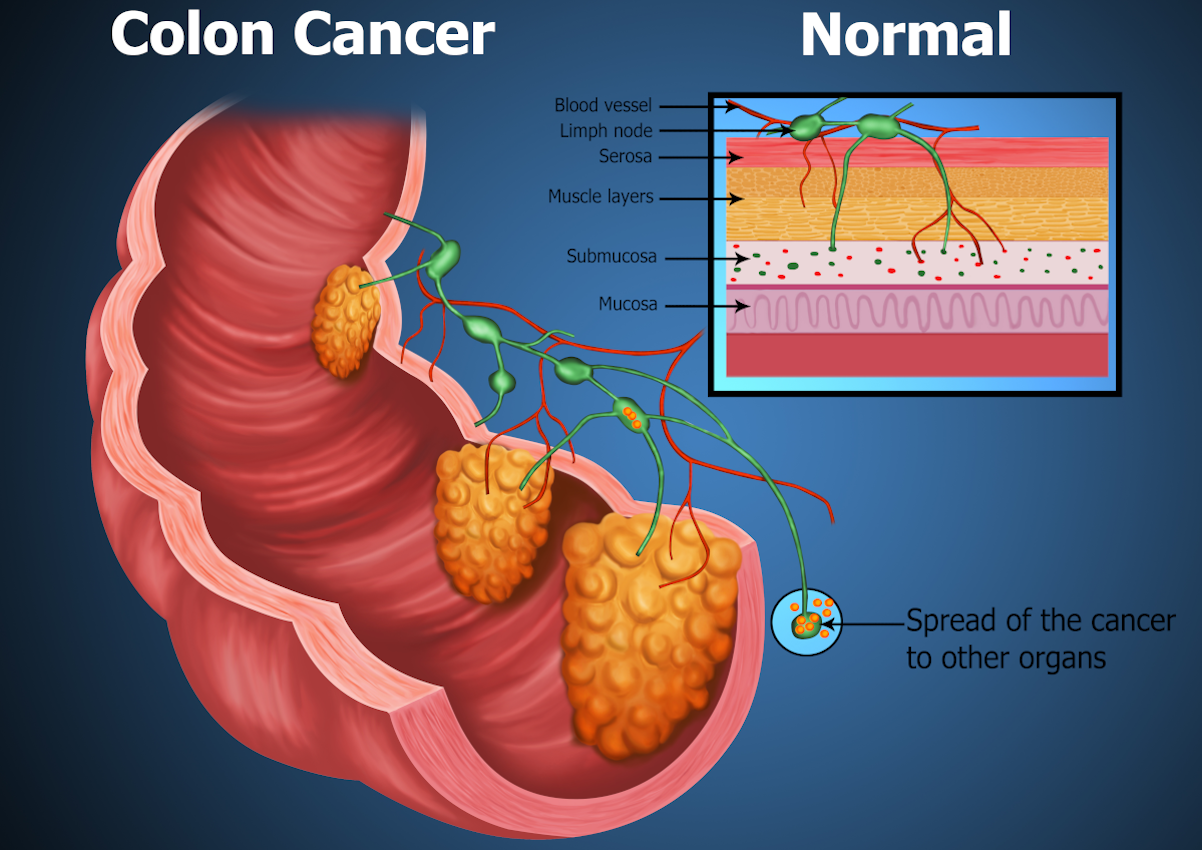
Regarding colon cancer, the prognosis is a significant concern for most patients. Fortunately, several different methods are available today to assess a patient’s prognosis, with the analysis of the disease stage being the most crucial.
Let’s explore the four stages of colon cancer:
- Stage 1: At this early stage, the tumour remains within the intestinal wall, not having sprouted through it. Removing a small tumour in this stage implies a favourable prognosis for colon cancer, resulting in almost all patients surviving.
- Stage 2: The tumour extends beyond the intestinal wall and develops distant metastases. The prognosis becomes less favourable as the tumour grows and spreads to the lymph nodes. To improve outcomes, oncologists employ a variety of treatments, including adjuvant chemotherapy. This active development in metastatic colon cancer treatment aims to increase overall survival.
- Stage 3: At this point, the tumour covers the entire intestinal wall thickness. The prognosis worsens as the cancer progresses, necessitating effective treatment strategies such as chemotherapy.
- Stage 4: The tumour has now spread to the lymph nodes. This advanced stage of colon cancer poses more significant challenges in terms of treatment. If cancer has penetrated vital organs like the liver, lung, bone, or brain, the disease becomes even more challenging to treat, resulting in a less favourable prognosis. Cases with single foci in the liver or lung tend to have a more positive outlook.
Anti-candida Mini Detox – three colonics with bicarbonate of soda
The Anti-candida mini detox involves a concentrated series of three colonics infused with bicarbonate of soda, ideally scheduled once weekly. This regimen serves as a potent initiation into a detoxifying cleansing routine, setting the pace for rejuvenation.
£358.28 or £301.11 if booked on-line
Prognosis of colon cancer for survival evaluation
Survival evaluation is a vital aspect of assessing the prognosis of colon cancer. While this indicator has evolved, patients’ quality of life has significantly improved. The medical practice continues to advance, equipping doctors with clinical and pathological criteria that allow them to determine the potential aggressiveness of tumours, which are typically poorly differentiated, by studying biomaterials under a microscope.
The number of metastases dramatically impacts the final prognosis. The more widespread the cyst becomes, the worse the outlook becomes. When cancer invades critical organs like the liver, lung, bone, or brain, the disease becomes less treatable, resulting in a less favourable forecast than cases with isolated foci in these organs.
Doctors are now acquiring more information about molecular markers, enabling patients to undergo appropriate examinations. The identification of a mutation in the BRAF gene indicates an unfavourable prognosis. While delivering this news can be challenging, doctors must inform patients about gene mutations and poor prognoses. Encouragingly, modern science has developed targeted medications that effectively address this predictive marker.
Food intolerance test of 208 ingredients
This is our most comprehensive food and drink test. It analyses your clientâs IgG antibody reactions to 208 food and drink ingredients. This test will highlight their food triggers and help you formulate an IgG-guided elimination diet together.
£199.00 £159.00