

-
Service:
Date:
Time:
Location:
Extras:
Eczema – atopic dermatitis
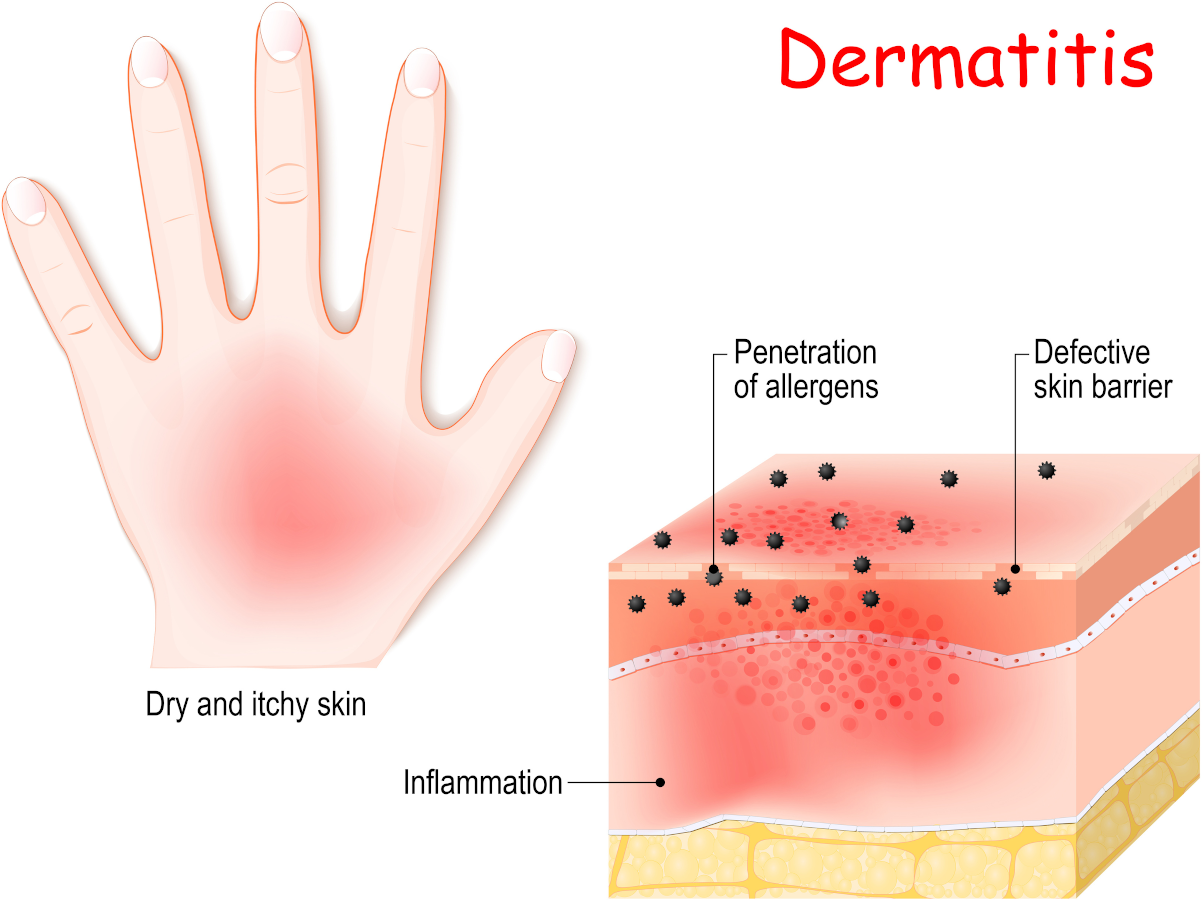
Eczema is a chronic allergic skin disorder that may begin between one month and one year. It often subsides by age three but flares up again at any age. Eczema typically manifests on the skin of the hands, scalp, face, back of the neck, or creases of elbows and knees. Scratching or rubbing may also lead to darkened, hardened areas of thickened skin with accentuated furrows, most commonly seen on the front of the wrists, elbows, and back of the knees.
CAUSES of Eczema:
Allergy
Eczema signals an immediate allergic response, and two-thirds of eczema sufferers have a family history of the disease. Many eczema sufferers also develop hay fever and asthma. Many eczema sufferers improve with a diet that eliminates typical food allergens such as milk, eggs, peanuts, and, to a lesser extent, fish, soy, wheat, citrus, and chocolate. Environmental allergens, such as ointments, soaps, detergents, cleansers, tanning agents, dyes, and topical medications, may also trigger eczema.
Immune system abnormalities
Specialised white blood cells called mast cells have abnormalities that cause them to release higher amounts of histamine and other allergic compounds than those without eczema. Eczema sufferers also have a defect in the activity of the “alternative complement pathway” (a mechanism for destroying bacteria and foreign particles).
Essential fatty acid (EFA) metabolism abnormalities
Studies have shown that omega-3 to omega-6 essential fatty acids are significantly lower in people with eczema. This imbalance leads to a greater tendency to inflammation and allergies because omega-6 EFAs produce pro-inflammatory prostaglandins (hormone-like compounds).

Alkalising colonic irrigation with sodium bicarbonate
Safe and effective colon hydrotherapy includes an initial consultation. Consequently, sodium bicarbonate delivered to the colon through hydrotherapy can kill off Candida.
£119.43 or £107.99 if booked on-line
Candida albicans
Elevated levels of anti-candida antibodies are typical in atopic individuals. The higher the level of these antibodies, the more severe the eczema.
Stress
Stress can also provoke and aggravate itching in people with eczema.
Eczema is a chronic allergic skin disorder that may begin between one month and one year. It often subsides by age three but flares up again at any age. Eczema typically manifests on the skin of the hands, scalp, face, back of the neck, or creases of elbows and knees. Scratching or rubbing may lead to darkened, hardened areas of thickened skin with accentuated furrows, most commonly seen on the front of the wrists, elbows, and back of the knees.
DIET AND LIFESTYLE for atopic dermatitis sufferers:
- Identify and eliminate food allergens. Eating allergenic foods damages the intestinal tract lining, resulting in a permeable “leaky gut. ” This allows allergens and other toxins to leak into the general circulation. That puts the immune system in a state of continuous alarm, significantly increasing a trigger-happy response to different foods and the chance of developing additional allergies.
- Add brown rice and millet to your diet.
- Avoid eggs, peanuts, soy foods, wheat, and dairy products. Numerous studies have shown that people suffering from virtually all skin disorders do better if they eliminate gluten and dairy from their diets.
- Also, avoid sugar, strawberries, citrus fruits, chocolate, white flour, fried foods, and processed foods.
- Do not eat foods containing raw eggs (mayonnaise, etc.), as these include a protein that binds to biotin and prevents it from being absorbed.
- Avoid rough-textured clothing. Wear clothing made of natural, non-irritating fibres such as cotton.
- Use cotton-lined rubber gloves for household cleaning tasks.
- Massage tea tree oil-containing antiseptic cream into the skin after contact with water or irritants.

Mini Detox PLUS – 3 colonics, minerals, herbal & probiotic implants
The ideal pattern of colonic treatments includes three alkalising colon hydrotherapy treatments with sodium bicarbonate, one anti-parasitic implant on the first treatment, one liver and gall bladder stimulating herbal implant on the second treatment, and a high-strength probiotic implant on the third colonic.
£443.40 or £372.26 if booked on-line
SUPPLEMENTS for eczema sufferers:
Vitamin A
- Critically important for the epithelial cells and mucosal tissues, beneficial in treating skin and gastrointestinal disorders. Dosage – 5000mg a day.
Vitamin E
- A powerful antioxidant. In treating eczema, vitamin E is essential in protecting vitamin A and increasing its storageâdosage – of 400mg daily.
Zinc
- Zinc is a cofactor in numerous enzymatic reactions. It is required to create delta-6 desaturase, the enzyme responsible for converting the essential omega-6 fatty acid into GLA, an anti-inflammatory prostaglandin. When zinc levels are inadequate, omega-6 is converted to arachidonic acid. The dosage is 45-60mg a day.
Ginkgo biloba
- It contains several unique molecules that block the effects of (the platelet-activating factor). A key chemical mediator in eczema. Dosage 80mg three times a day.
Omega-3 essential fatty acids
- Omega-3 essential fatty acid levels are often significantly reduced in people with eczema. The recommended dosage is 2g a day.
Quercitin
- It is a valuable antihistamine and anti-allergy compound. It not only inhibits the release of histamine but also acts as a powerful antioxidant and inhibits the formation of histamine and other allergic compounds. The dosage is 400mg 20 minutes before meals.

Food intolerance test of 208 ingredients
This is our most comprehensive food and drink test. It analyses your clientâs IgG antibody reactions to 208 food and drink ingredients. This test will highlight their food triggers and help you formulate an IgG-guided elimination diet together.
£199.00 £159.00